What Do Flamingos Eat?
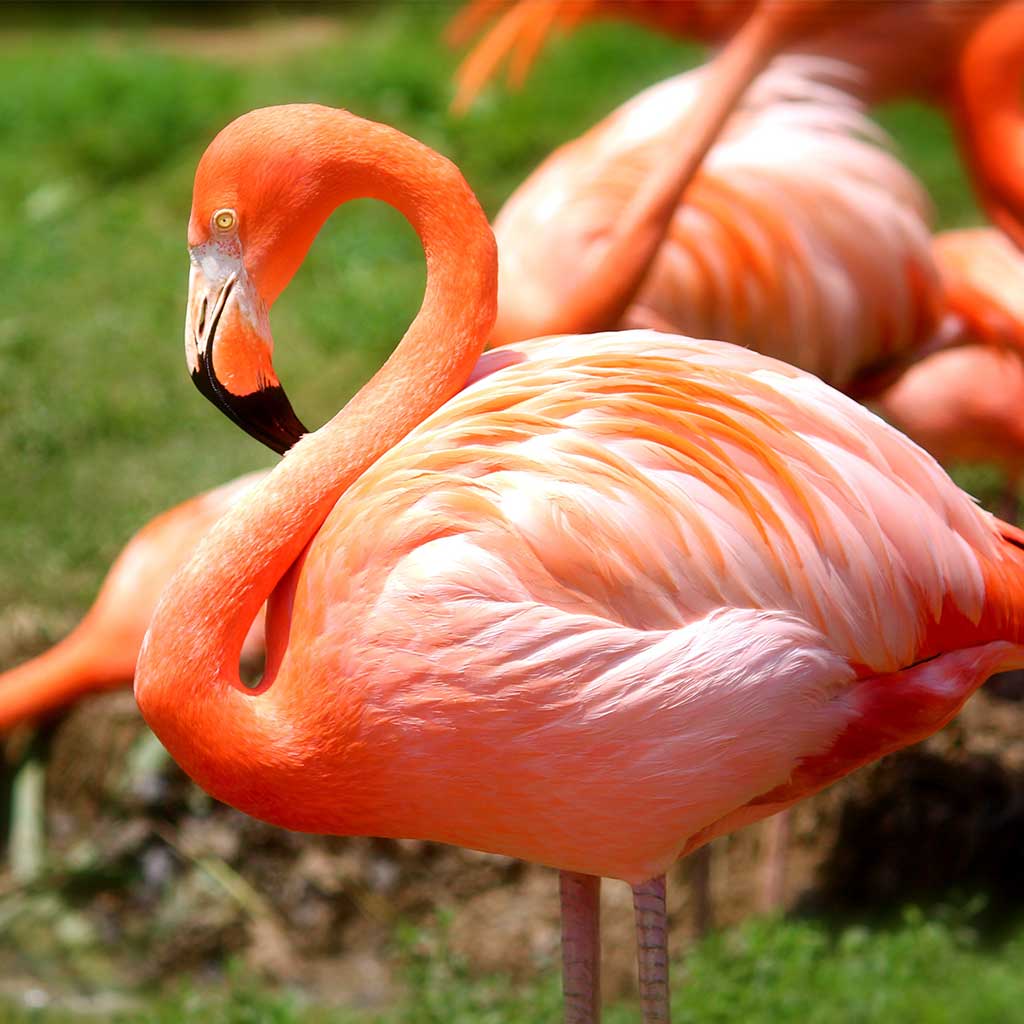
The saying “you are what you eat” is especially apt for flamingos. Pigments in their food help produce the pink, orange, and red tones in their feathers.
So what do flamingos eat?
Flamingos filter algae, diatoms, cyanobacteria, small crustaceans, insect larvae, mollusks, and other tiny organisms from water. The proportions vary by species and habitat.
Are Flamingos Pink Because of The Food They Eat?
Flamingo chicks hatch with white or gray down. As they grow, carotenoid pigments obtained from algae, cyanobacteria, and small invertebrates are deposited in new feathers and skin. These pigments produce shades of pink, orange, and red. Eating blue-green algae does not turn a flamingo blue; there are no naturally blue flamingos.
When eating food containing carotenoids, the bird’s digestive system extracts that pigment, which dissolves in fats. The fats are then deposited in new feathers as they grow, and the flamingo’s color slowly turns to pink.
Flamingos eat algae, diatoms, cyanobacteria, brine shrimp and other crustaceans, insect larvae, mollusks, and other organisms small enough for their specialized bills to filter.
Unfortunately, not all flamingos are exposed to such a great variety of foods which include carotenoids and beta-carotene pigments. Why? Because these type of food is not available in every part of the world. This is why, some flamingos might have pale pink feathers because, in the parts of the world they inhabit, there is no much food rich in carotenoids. For example, flamingos in central Kenya tend to be a paler pink. But flamingos living in America usually have a beautiful bright red color, because of the foods rich in pigments which make them look pink.
- Lesser, James’, and Andean flamingos have larger bills, so they feed mainly on algae and diatoms, cyanobacteria, and hard-shelled, single-celled plants.
- Greater, Caribbean and Chilean flamingos feed on larger organisms such as insects, aquatic invertebrates, and small fishes.
- Caribbean flamingos eat larger organisms, small fish, insects, larval and pupal forms of flies and brine shrimp.
Therefore, based on flamingos’ diet and based on the type of food they consume, their feathers will look from bright pink to pink to orange.
What is Beta-Carotene?
Beta-carotene is a nutritious, natural, organic chemical that contains a reddish-orange pigment, present in the brine shrimp that turns flamingos\ feathers pink. Beta-carotene is also present in many other plants, like tomatoes, pumpkins, sweet potato, and spinach. This is also the very same compound that makes carrots orange. Beta-carotene is an essential chemical for humans, birds, and animals because it is a building block that the bodies use to manufacture Vitamin A.
If flamingos would stop eating food containing carotenoids, their feathers will begin growing in with a much paler shade.
What Do Baby Flamingos Eat?
When born, baby flamingos have white or gray color, and it is the size of a tennis ball. It also has a straight, pink bill and swollen pink legs, both of which turn black within a week.
Their survival and their diet solely depend on their parents, until they are strong enough, to start feeding themselves. During the first weeks of their life, they feed on a bright red ‘milk’ produced by either parent. That is correct. Flamingo parents produce a bright red sort of crop ‘milk’ in their upper digestive tract. ‘Milk’ is red due to the pigment canthaxanthin, and is rich in proteins and fats. Chicks store this pigment, which comes from the corp ‘milk’ in the liver, to be deposited in their adult feathers when they grow. Both parents can produce ‘milk’ and male and female. They spit this corp ‘milk’ up to feed their babies.
As the parents feed their chicks the crop milk, they are depleted of their color and their plumage easily turns a pale pink, or even white! The parents gain this color back eventually as the chicks become independent and eat on their own.
Baby flamingos stay in the nest for a few weeks, and their parents take care of their diets. After a few weeks, baby flamingos are ready to join other young flamingos where they learn how to catch their food.
Why Do Flamingos Eat Upside Down?
There are two notable facts about how flamingos eat. First, they are filter feeders, meaning that they filter food from the water. Second, flamingos feed with their heads upside down.
Often, they hold their bent bills upside down while feeding for several hours a day, so that they can filter out their food. First, they stir up food from the bottom of the water before they lower down their bill to swallow.
Next, with the help of tiny openings at the top of the bill and structures called lamellae, help them strain and drain out all shrimp, algae, insects, or fish they may be caught. The tongue, as well as the beak, have bristle-like structures that help in filtering food from the water. Flamingos tongue pumps water in and out, about three times a second, to help filter out any food that is too larger or extremely small for them to eat. They have a larger lower bill and a smaller upper bill. The upper bill is not fixed, which is the opposite of other birds. The flamingo’s top beak functions like the bottom beak of most birds, and vice versa.
Food and water intake varies with species, body size, diet, temperature, and habitat, so there is no useful universal daily amount. Flamingos often feed in saline or alkaline water. They can excrete excess salt through specialized nasal salt glands, and they also drink fresh water when it is available.